Houses are the most expensive objects most people will ever buy, so it is tempting to think we understand their prices. Remarkable houses break the intuition. Their costs are less about square metres than about the decisions that made them difficult: a site nobody else would build on, a structure that defies its materials, finishes that only a few workshops can supply, and collections that turn rooms into exhibits.
The five layers of cost
It helps to peel a remarkable home into layers. Land is priced by location and by the impossibility of making more of it. Structure is priced by ambition: a cantilever or a glass wall costs more than a box. Finishes carry the craft costs discussed in our room on labour. Systems such as climate control for art, security and staff quarters add hidden volume. And maintenance, the least glamorous layer, quietly outlives everything else.
A house over a waterfall
Frank Lloyd Wright designed Fallingwater in 1935 for the Pittsburgh department store owner Edgar J. Kaufmann, placing the house directly over the falls of Bear Run in Mill Run, Pennsylvania. Its reinforced concrete terraces reach out over the water with almost no visible support. The effect is unforgettable; the engineering was precarious. The cantilevers began to sag within decades, and the Western Pennsylvania Conservancy, which has cared for the house since 1963, completed a major structural repair using post-tensioned steel cables in 2002. In 2019 Fallingwater was inscribed on the UNESCO World Heritage List as part of a group of Wright's 20th-century buildings. Daring structure, the lesson goes, is paid for long after the architect's fee.
A house that became a cabinet
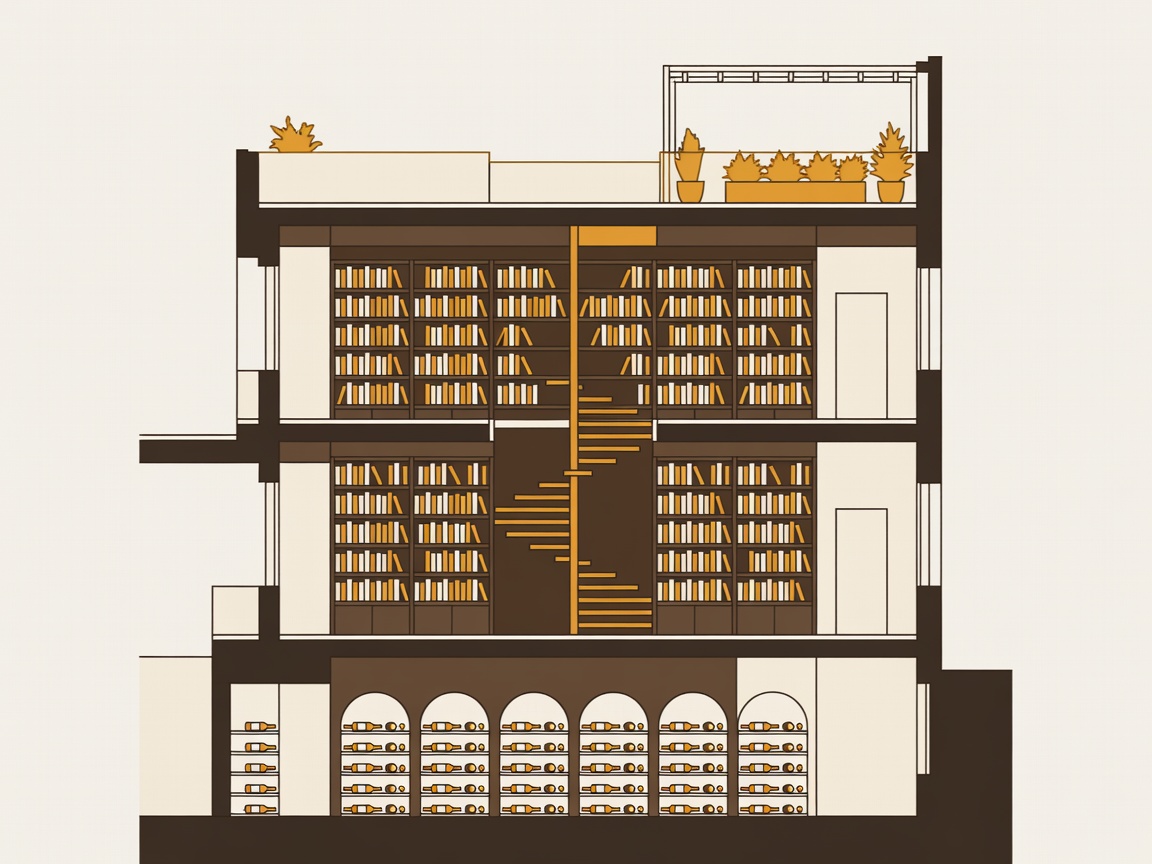
For this cabinet of curiosities, Sir John Soane's Museum on Lincoln's Inn Fields in London is the spiritual ancestor. Soane, architect of the Bank of England, filled his house with antiquities, casts, drawings and paintings, including William Hogarth's series A Rake's Progress, arranged with hinged picture walls, mirrors and top-lit domes. An Act of Parliament in 1833 secured the house to be kept, as far as possible, as he left it. The building's value today lies not only in its contents but in their arrangement, something no auction could reproduce. Admission is free, which is perhaps the most luxurious fact about it.
Building for decades
Hearst Castle in San Simeon, California, was designed by Julia Morgan for the publisher William Randolph Hearst and built over almost three decades, from 1919 to 1947. Whole ceilings and architectural fragments were shipped from Europe and fitted into new rooms. Today it is a California State Park, its upkeep funded publicly and through visitors. In France, the Palace of Versailles relies on patrons and corporate sponsors for many of its restorations, a reminder that even states find exceptional buildings expensive to keep.
Towers of private ambition
In Mumbai, Antilia, the residence of Mukesh Ambani, is widely reported to rise 27 storeys and to include parking levels, gardens and a health centre. Construction cost estimates circulate freely in the press but have not been confirmed by the owner, so we do not repeat them. That restraint is part of reading the number in context: an impressive building attracts impressive guesses.
Asking prices versus sales
The residential market at the top end is opaque. Many listings say "price on request", many sales happen off-market, and published asking prices can sit unchanged for years. Public land registries record completed transactions in some countries, but not every structure or company holding is visible. When we cite a property figure, we say whether it is a registered sale, a reported sale or an asking price, and we prefer the first.
| Cost layer | What it pays for | Example |
|---|---|---|
| Land | Location, views, an unrepeatable site | Fallingwater built over Bear Run |
| Structure | Engineering that defies the obvious | Fallingwater's cantilevers, repaired in 2002 |
| Finishes | Imported or hand-made surfaces | European ceilings fitted at Hearst Castle |
| Collections | Contents and their arrangement | Sir John Soane's Museum, preserved by 1833 Act |
| Maintenance | Permanent care and staff | Patron-funded restorations at Versailles |
- Cantilever
- A beam or slab anchored at only one end, projecting into space.
- Post-tensioning
- Tightening steel tendons inside concrete after it sets to strengthen it.
- Off-market sale
- A property transaction arranged privately without public listing.