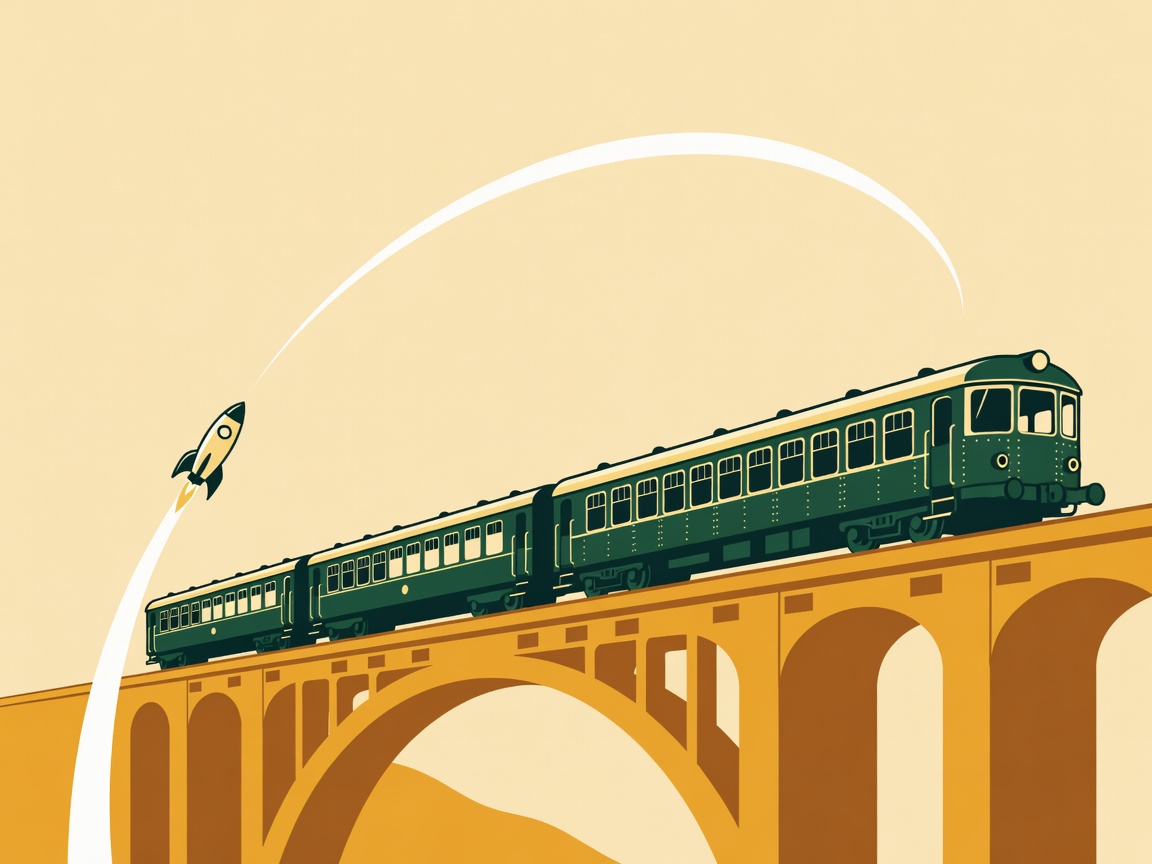
Objects can be resold; experiences are consumed. That single fact changes how their prices behave. Nobody bids up a used train ticket, and nobody inherits a sunset. What people pay for is a combination of limited places, complex logistics, specialist staff, insurance against things going wrong and, often, the right to say they were there. This room looks at a few journeys whose price tags make headlines and asks what is folded inside them.
What the ticket contains
Every exceptional experience can be broken into the same parts. There is access, the permission or capacity that only a few people can have at once. There is logistics: fuel, permits, supply chains and the cost of operating somewhere difficult. There is staffing, frequently at ratios close to one employee per guest. There is risk, priced through insurance, training and safety margins. And there is opportunity cost: a cabin that can host only one party on a given night cannot spread its fixed costs across anyone else.
A train that runs on restoration
The Venice Simplon-Orient-Express exists because the American businessman James Sherwood bought two vintage sleeping cars at a Sotheby's auction in Monte Carlo in 1977 and went on to acquire and restore further carriages from the 1920s and 1930s. The revived service began running in 1982 and is now operated by Belmond, part of LVMH. The fare pays for marquetry, brass and upholstery that must be restored and maintained by specialists, for staff in every carriage, and for a very small number of berths per journey. A modern train could carry many more passengers far more cheaply; the point is that it would not be this one.
The highest ticket of all
In April 2001 the American businessman Dennis Tito flew aboard a Russian Soyuz spacecraft to the International Space Station, a trip arranged through Space Adventures and widely reported to have cost about US$20 million. He is generally described as the first fee-paying space tourist. Two decades later, Virgin Galactic published a price of US$450,000 per seat for its suborbital flights in 2022. Even at that figure, the ticket is cheap relative to the cost of developing, certifying and operating a spacecraft; the price reflects how few seats exist and how much engineering and training surround a few minutes of weightlessness.
Ice and distance
Antarctic expedition cruises are expensive partly because of fuel and remoteness, and partly because of deliberate limits. Operators belonging to the International Association of Antarctica Tour Operators (IAATO) follow guidelines that generally allow no more than 100 passengers ashore at one site at a time, and ships carrying more than 500 passengers do not make landings. Scarcity here is a conservation tool. The price reflects not luxury in the usual sense but a carefully rationed encounter with one of the least visited places on Earth.
Hotel rooms that are really stages
The Burj Al Arab in Dubai, designed by Tom Wright of Atkins and opened in 1999, stands on an artificial island and has become a shorthand for hotel opulence. Its largest suites are quoted on request, and published rates vary widely with season and demand. Such suites are priced less like rooms than like private venues: butlers, transfers and a setting designed to be photographed. When reading any hotel price, check whether it is per room or per person, per night or per stay, and what taxes and service charges are added.
| Experience | Figure | Status | Main price driver |
|---|---|---|---|
| Dennis Tito to the ISS, 2001 | About US$20m | Widely reported | Access and risk |
| Virgin Galactic seat, 2022 | US$450,000 | Published by operator | Very few seats |
| Antarctic landing (IAATO) | Max. 100 ashore per site | Operator guideline | Rationed access |
| Venice Simplon-Orient-Express | Varies by route | Published fares change | Restoration, few berths |
Reading an experience price
Experience prices are slippery because inclusions vary. A safari lodge may include flights and park fees; a cruise may not include excursions. Before comparing, convert everything to the same unit and list what is excluded. Then ask the cabinet's usual question: which part pays for hours, which for scarcity, and which for the story you will tell afterwards?
- Suborbital flight
- A flight that reaches space but does not complete an orbit of Earth.
- IAATO
- The International Association of Antarctica Tour Operators, founded in 1991 to promote safe and responsible travel.
- Rack rate
- A hotel's standard published price before discounts.